
Many individuals and businesses today have adopted cloud technology. This means they now use cloud platforms to store data, run applications, and manage business operations over the internet. And in return, they enjoy the benefits, because unlike physical servers, storage devices, and software systems, cloud has more flexibility, scalability, lower infrastructure costs, and can be accessed from virtually anywhere.
Many organizations have even gone a step further by adopting multiple cloud providers. For example, a company might use Amazon Web Services (AWS) to store and manage large amounts of business data while relying on Microsoft Azure to run its internal applications. And of course, this approach offers several advantages too. However, it also comes with the burden of observability. That is the need to now keep an eye on everything happening across these different cloud environments. But why is observability so important?
This is exactly what we will be discussing in this article. We explore why observability has become essential in multi-cloud operations and examine the tools, technologies, and practices that make it possible. Let’s dive right in!
Understanding Multi-Cloud Operations
Before we can fully understand why observability has become so important, we first need to understand what a multi-cloud environment actually is and why so many organizations are adopting it.
What Is a Multi-Cloud Environment?
As the name implies, multi-cloud simply means multiple or more than one cloud environment. It simply means that an organization is using multiple, or more than one, cloud provider as part of its operations.
As the example shared earlier, a company might use AWS to store customer data, Microsoft Azure to run internal business applications, and Google Cloud to power data analytics or artificial intelligence tools. These three services are all part of the company’s operations. But they are hosted on different cloud platforms. In a single-cloud deployment, however, they will all be hosted on one cloud provider.
Why Organizations Adopt Multi-Cloud Strategies
When an organization has all its operations done on a single-cloud setup, it’s usually more straightforward to manage. But with multiple cloud providers, things start getting a little complicated. This then begs the question, why do organizations still use multiple cloud providers?
The simple answer to this question is the benefits that they get from using multiple cloud providers. Here are some key benefits as outlined below:
- Reliability: Simply put, two or more is more reliable than one. That is, if one cloud provider experiences an outage or service disruption, they can easily continue critical workloads on another platform.
- Flexibility: Using multiple cloud providers gives organizations greater freedom in how they deploy and manage their workloads. It allows them to choose the most suitable platform for different tasks rather than being tied to a single provider.
- Reduced Vendor Lock-In: Relying entirely on one cloud provider can make switching providers later difficult, expensive, and disruptive. If they spread workloads across multiple cloud platforms instead, they avoid becoming overly dependent on a single vendor.
- Access to Specialized Services: Different cloud providers excel in different areas. One provider may offer stronger artificial intelligence tools, while another may provide better data storage, security features, or enterprise application support. A multi-cloud strategy allows businesses to take advantage of the best features each platform offers.
- Regulatory Compliance: Certain industries and regions have strict requirements regarding where data can be stored and how it must be managed. Using multiple cloud providers can help organizations meet these compliance requirements more effectively.
The Operational Challenges of Multi-Cloud Environments
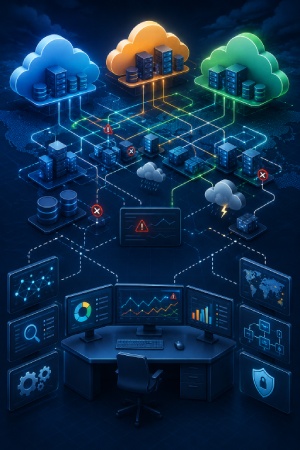
As we have already discussed, adopting a multi-cloud strategy comes with several benefits. But there are also certain trade-offs. Here are some of the key trade-offs or challenges:
Complexity
Simply put, the more cloud platforms an organization uses, the more complex its operations become. In a single-cloud setup, you only need to manage one set of tools, configurations, and processes. In a multi-cloud environment, however, each platform has its own architecture, services, and management systems. And so, managing multiple systems at the same time, with different workloads spread across different providers, can be very challenging.
Complexity is the biggest challenge of multi-cloud operations because it creates or amplifies many other issues. The more complexity you have, the more visibility gaps, performance risks, and troubleshooting difficulties you will be prone to.
Limited Visibility Across Cloud Platforms
Every cloud provider typically comes with its own monitoring tools, dashboards, and reporting systems. And so, when you have multiple cloud platforms, you’ll have to start jumping between multiple dashboards just to understand the health and performance of your systems. And without that centralized visibility, identifying trends, spotting issues, and understanding how different cloud resources interact becomes much harder.
Performance and Reliability Risks
When applications, databases, and services are spread across multiple cloud providers, they frequently need to communicate with one another. This communication often takes place over networks that span different cloud environments.
So users may experience delays because requests can take longer to move between services hosted on different platforms. There may also be service interruptions if one cloud provider experiences an outage or if communication between cloud environments is disrupted.
Troubleshooting Difficulties
This is perhaps one of the most frustrating challenges of multi-cloud operations. When an issue occurs in a single-cloud environment, the source of the problem is often easier to identify because everything exists within one platform. In a multi-cloud setup, however, the problem could originate from several different places. So finding the true root cause of the problem often requires investigating multiple systems, platforms, and data sources.
And because you have to investigate multiple systems, identifying and fixing the problem can take valuable time. And the more an organization continues to expand its use of multiple cloud providers, the more these challenges become increasingly common.
This is precisely why maintaining visibility across the entire environment is so important, and why observability has become a critical part of modern multi-cloud operations.
What Is Observability?
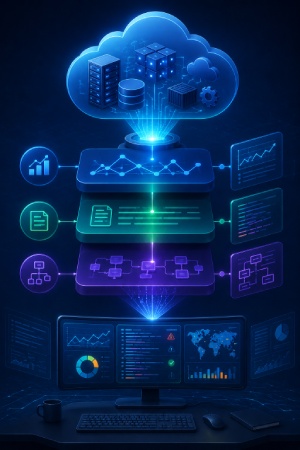
Simply put, observability is the ability to understand what is happening inside a system by looking at the information it produces. In other words, it helps organizations gain visibility into the health, performance, and behavior of their applications, infrastructure, and cloud services.
Observability is built on three primary sources of operational data: metrics, logs, and traces.
Metrics
Metrics are numerical measurements that provide insight into how a system is performing. They help organizations track system performance and identify unusual behavior before it develops into a larger problem. Examples of metrics include:
- Resource utilization, such as CPU, memory, and storage usage.
- Application response times.
- Error rates and failed requests.
- Network traffic levels.
Logs
Logs are detailed records of events that occur within a system. That is, records of when an application starts, a user logs in, a database query runs, or when an error occurs. Each of these events generates a log entry.
And so, when troubleshooting issues, logs often serve as one of the first places administrators look for answers. This is because they show exactly what happened and when it happened.
Traces
Traces help organizations follow the path of a request as it moves through different services and systems. For example, when a user visits a website, their request may pass through several components, including web servers, databases, APIs, and cloud services. A trace records that journey and shows how each component handled the request.
This makes it much easier to identify delays, bottlenecks, or failures, especially in complex multi-cloud environments where services may be spread across different cloud platforms.
How Telemetry Powers Observability
Observability would not be possible without telemetry. Telemetry refers to the process of automatically collecting and transmitting operational data from applications, infrastructure, networks, and cloud services. This data is then analyzed to provide visibility into system performance and behavior.
The metrics, logs, and traces discussed earlier are all forms of telemetry data. Modern observability platforms continuously gather this information from various parts of an organization’s environment and bring it together in a centralized location.
As a result, IT teams gain real-time visibility into the health and performance of their systems. They can monitor ongoing operations, detect issues early, investigate problems more efficiently, and make informed decisions based on accurate data.
Why Observability Became Essential in Multi-Cloud Operations
At this point, the importance of observability is probably becoming clearer. It’s simple: multi-cloud environments offer organizations greater flexibility, reliability, and access to specialized services, but they also introduce significant complexity. And so maintaining visibility and control becomes increasingly difficult. This is exactly why observability has become essential in modern multi-cloud operations.
Below is a list of important things that observability makes possible and easier when it comes to operating multi-cloud platforms:
Creating Unified Infrastructure Visibility
One of the biggest benefits of observability is that it provides a unified view of an organization’s infrastructure.
As we discussed earlier, each cloud provider typically comes with its own monitoring tools and dashboards. And while these tools provide visibility into resources running on their specific platform, they often do not provide a complete picture of the entire environment.
Observability solves this problem by bringing data from multiple cloud providers into a centralized view. So instead of switching between several dashboards to understand what is happening, IT teams can monitor applications, services, networks, and infrastructure from a single location.
Improving Application Performance Monitoring
If an application has its frontend running on one cloud platform, its database hosted on another, and various supporting services distributed elsewhere, without observability, tracking the health and performance of such an application can be extremely difficult. But with observability, you can collect and analyze metrics, logs, and traces to monitor response times, track application health, and identify services that are running slower than expected. This makes it easier to spot bottlenecks before they begin affecting users.
Enabling Faster Incident Detection
The sooner an organization identifies a problem, the sooner it can resolve it. This is another area where observability provides significant value. Since observability platforms continuously monitor systems, they can generate real-time alerts whenever unusual behavior is detected. And so, IT teams can often identify service disruptions early and begin responding immediately.
Accelerating Root Cause Analysis
Detecting a problem is important, but understanding why it happened is usually more important. In a multi-cloud environment, finding the root cause of an issue can be challenging because applications often depend on multiple services spread across different platforms.
This is where telemetry data becomes extremely valuable. Metrics, logs, and traces provide detailed information about what was happening throughout the system before and during an incident. As a result, organizations can reduce the average time required to identify and fix an issue.
Supporting Operational Reliability
Ultimately, all of these benefits contribute to one larger goal: operational reliability. Organizations depend on their applications and services being available whenever customers and employees need them. And if there’s downtime, it can result in lost revenue, reduced productivity, and damaged customer trust.
By providing continuous visibility into system health, enabling early issue detection, and accelerating troubleshooting, observability helps organizations maintain higher levels of uptime and service availability.
In short, observability has become essential because it provides the visibility, insights, and operational intelligence needed to effectively manage modern multi-cloud environments. Without it, maintaining performance, reliability, and control across multiple cloud platforms would be significantly more difficult.
Key Components of Modern Multi-Cloud Observability
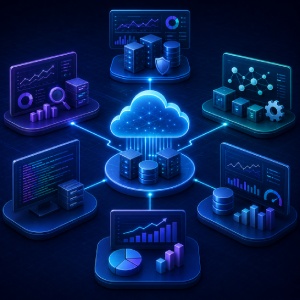
Now that we understand what observability is and why it has become so important in multi-cloud environments. The next question is: what actually makes observability possible?
The answer is in the fact that several key components work together to provide visibility into applications, infrastructure, and cloud services. Each component focuses on a different aspect of the environment. The key components are:
- Infrastructure Monitoring: Infrastructure monitoring focuses on the health and performance of the resources that support applications and services. This includes servers, virtual machines, containers, networks, databases, and cloud resources. It tracks metrics such as CPU usage, memory consumption, storage capacity, and network activity.
- Application Analytics: While infrastructure monitoring focuses on underlying systems, application analytics focuses on the applications themselves. It helps organizations understand how applications are performing and how users interact with them by tracking things like page load times, transaction failures, errors, and usage patterns.
- Distributed Tracing: Distributed tracing follows a request as it moves through multiple services and systems, even when those services are hosted across different cloud providers.
- Log Management and Analysis: Log management involves collecting logs from applications, servers, cloud services, and other systems into a centralized location for easier access and analysis.
- Performance Tracking and Capacity Planning: Performance tracking helps organizations monitor long-term trends in resource usage and system performance, while capacity planning uses those insights to predict future infrastructure needs.
How Observability Improves Operational Troubleshooting
One of the biggest reasons observability has become essential in multi-cloud environments is its ability to simplify troubleshooting. In simple terms, it makes it easier for organizations to identify, investigate, and resolve problems across their cloud infrastructure before they significantly impact users or business operations. Here’s how:
Simplifying Cross-Cloud Problem Investigation
Issues in multi-cloud environments can originate from multiple applications, services, networks, or cloud providers. Without proper visibility, finding the source of a problem can be a slow and frustrating process. Observability helps overcome this challenge by bringing together data from different environments into a single view, allowing IT teams to better understand how systems interact and where issues are occurring.
Detecting Problems Early Through Proactive Monitoring
Even better, observability promotes a proactive approach to system management. Rather than waiting for users to report problems, observability tools continuously monitor systems for unusual behavior, identify warning signs early, and help teams address issues before they develop into major disruptions.
Minimizing Downtime and Service Disruptions
Visibility also leads to faster diagnosis and recovery when problems do occur. By providing the context needed to quickly pinpoint failures, performance bottlenecks, or service interruptions, observability helps reduce troubleshooting time and speeds up resolution efforts. As a result, organizations can minimize downtime, maintain service availability, and reduce the impact of disruptions on both users and business operations.
Additional Benefits of Observability in Multi-Cloud Environments
While observability is often associated with monitoring performance and troubleshooting issues, its benefits extend far beyond those areas. In multi-cloud environments, observability can also help achieve the following:
- Better Security Monitoring: Since observability helps organizations maintain visibility into activities occurring across their systems, it becomes easier to detect unusual behavior that may indicate a security issue.
- Improved Cost Optimization: Using multiple cloud resources offers flexibility, but they can also become expensive if they are not properly managed. One of the advantages of observability is that it provides detailed insights into how resources are being used across different cloud environments. And so, organizations can easily spot underutilization and wastage.
- Stronger Compliance and Governance: Many organizations operate under strict regulatory and compliance requirements that govern how data is stored, accessed, and managed. Observability can play an important role in helping businesses meet these obligations.
Best Practices for Implementing Multi-Cloud Observability
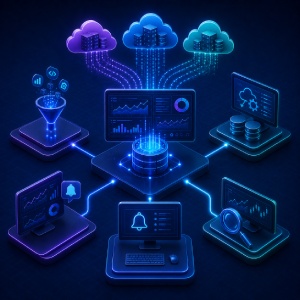
Now, adopting observability tools is not enough. You need to understand how to implement it strategically to get the full benefits. The following are the best ways to implement:
Centralize Telemetry Collection
Since observability relies on data such as metrics, logs, traces, and events, organizations should gather this information from all cloud platforms into a single location. Doing so provides a unified view of the entire environment and eliminates the need to constantly switch between different monitoring systems when investigating issues.
Standardize Monitoring Across Cloud Providers
Different cloud providers often use different monitoring tools, formats, and reporting methods. To avoid inconsistencies, organizations should establish standardized monitoring practices across all cloud environments. This ensures that performance metrics, alerts, and observability data are collected and interpreted in a consistent manner.
Use Automated Alerting and Dashboards
Modern cloud environments generate massive amounts of operational data, making manual monitoring impractical. Automated alerting can help detect unusual behavior and potential issues as soon as they occur.
Continuously Review Performance Data
Observability should not be treated as a one-time implementation. Organizations should regularly review performance data to identify trends, recurring issues, and opportunities for improvement.
Seeing Clearly Across the Multi-Cloud Maze
Using multiple cloud platforms offers organizations numerous benefits. However, these benefits also come with increased operational complexity, which makes maintaining visibility and control significantly more challenging.
This is where observability makes a difference. It gives organizations the visibility and insights needed to effectively manage complex multi-cloud operations.